Sugar, Cream, and Consequence: The Surprising Climate Cost of America's Birthday Cake Tradition
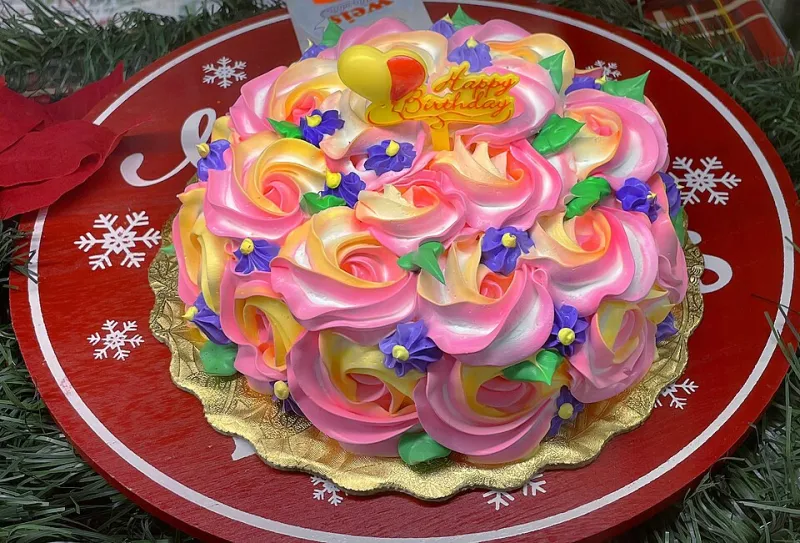
Photo: Tim-desser, CC0, via Wikimedia Commons
Birthday celebrations are, by most cultural measures, among the most universal and emotionally resonant rituals in American life. The candles, the song, the first slice—these moments carry genuine meaning. Yet underneath that frosted surface lies a chain of industrial processes, long-haul logistics, and organic waste that quietly contributes to the nation's carbon ledger in ways few partygoers ever consider.
The birthday cake, it turns out, is not simply a dessert. It is a supply chain.
The Dairy and Sugar Problem at the Core
Butter, eggs, heavy cream, and milk are foundational ingredients in the vast majority of American birthday cakes—whether baked from scratch at home or produced at industrial scale by commercial bakeries. These ingredients share a common origin: livestock agriculture, one of the most emissions-intensive sectors in the global food system.
The United States dairy industry produces approximately 100 million metric tons of carbon dioxide equivalent emissions annually, according to data from the Environmental Protection Agency. Methane from enteric fermentation—the digestive process of cows—is a particularly potent greenhouse gas, with a warming potential roughly 80 times greater than carbon dioxide over a 20-year horizon. Every cup of heavy cream piped into a frosting recipe carries that atmospheric weight with it.
Refined sugar presents its own environmental complications. Sugarcane cultivation, which supplies a significant portion of the U.S. sweetener market, is associated with deforestation, heavy pesticide application, and substantial water consumption in growing regions across Florida and Louisiana. Sugar beet production, while domestically dominant, relies on energy-intensive processing facilities that contribute meaningfully to regional industrial emissions. Neither source is environmentally neutral.
When these two ingredient categories are combined in a single celebration cake—often in quantities far exceeding what any gathering will actually consume—the embedded emissions add up faster than most consumers realize.
The Transportation Layer Nobody Sees
Commercial bakery cakes, which account for a growing share of the birthday market as Americans increasingly opt for convenience over home baking, travel remarkable distances before reaching a party table. Ingredients are sourced from geographically dispersed producers, consolidated at regional processing facilities, incorporated into finished products at commercial bakeries, and then shipped—often refrigerated—to retail locations or delivered directly to consumers via third-party logistics networks.
Refrigerated transport is among the most energy-intensive forms of freight movement. The cold chain required to keep a cream-frosted cake structurally intact during a multi-hour delivery journey demands continuous electricity generation from diesel-powered refrigeration units. For same-day delivery services, which have expanded aggressively into the specialty bakery market in cities like New York, Los Angeles, and Chicago, the last-mile delivery segment frequently involves single-occupancy vehicles making inefficient, stop-heavy routes—one of the least fuel-efficient transportation patterns in existence.
Even the home baker is not exempt from transportation emissions. Specialty cake ingredients—fondant, food coloring, imported vanilla extract, European-style butter—often require dedicated shopping trips or individual e-commerce shipments, each carrying its own carbon overhead.
The Packaging Problem
A commercial birthday cake typically arrives encased in layers of packaging: a rigid plastic dome, a cardboard base, a decorative outer box, and frequently an additional layer of plastic wrap or cellophane banding. Much of this packaging is not recyclable in standard curbside programs, particularly when contaminated with food residue—which, in the context of frosted baked goods, is essentially guaranteed.
The United States generates more plastic packaging waste per capita than any other nation on Earth, according to research published in Science Advances. Birthday cakes represent a small but symbolically significant slice of that total. The single-use nature of celebration packaging, designed for a few hours of visual presentation and then discarded, exemplifies the broader tension between consumer convenience and environmental sustainability.
The Uneaten Slice: America's Most Overlooked Climate Variable
Food waste is, by any rigorous accounting, one of the most consequential and underappreciated drivers of climate change. The USDA estimates that between 30 and 40 percent of the U.S. food supply is wasted. Birthday cakes, served at celebrations where portion sizes are often miscalculated and leftovers are frequently forgotten in the refrigerator, contribute meaningfully to this figure.
When food waste reaches landfills—as the majority of it does in the United States—it decomposes anaerobically, generating methane. A half-eaten birthday cake, wrapped in its plastic dome and forgotten in a break room, eventually becomes a methane emitter. Multiply that by the tens of millions of birthday celebrations that occur in the United States each year, and the aggregate climate impact is no longer trivial.
Plant-Based and Homemade: Meaningful Solutions or Marginal Fixes?
The emergence of plant-based baking alternatives—aquafaba replacing eggs, coconut cream substituting for dairy, unrefined cane sugar or maple syrup standing in for conventional sweeteners—has opened new possibilities for lower-impact celebration baking. Research consistently shows that plant-based food systems generate substantially fewer greenhouse gas emissions than their animal-product-dependent counterparts.
Homemade cakes, prepared with locally sourced or organic ingredients, eliminate the transportation and packaging layers associated with commercial products. They also tend to be produced in quantities better calibrated to the actual size of the gathering, reducing the likelihood of significant waste.
However, climate advocates are careful to note that individual behavioral change, while genuinely valuable, cannot substitute for systemic reform. The agricultural supply chains underpinning conventional cake ingredients are shaped by federal subsidy structures, trade policy, and land-use regulations that individual consumers cannot meaningfully influence through purchasing decisions alone. The birthday cake problem is, in part, a policy problem.
Rethinking the Ritual Without Abandoning It
None of this analysis suggests that birthday celebrations should be abandoned or that the emotional significance of shared food rituals ought to be minimized. The goal, from a sustainability perspective, is not austerity—it is intention.
Choosing a smaller cake sized to the actual guest list, selecting a bakery that sources regional ingredients, opting for compostable packaging, or experimenting with plant-based recipes are all steps that reduce emissions without diminishing the meaning of the occasion. Community composting programs, now available in many U.S. municipalities, offer a responsible destination for unavoidable food scraps.
The deeper opportunity lies in treating the birthday cake as what it actually is: a product embedded in a global industrial system. When Americans begin to see their celebration choices through that lens, the candles on the cake illuminate something more than a single year of life. They illuminate the full arc of consequence that every consumer decision carries—and the genuine possibility of making those decisions differently.