Underfoot and Overlooked: The Quiet Climate Toll of America's Radiant Floor Heating Fixation
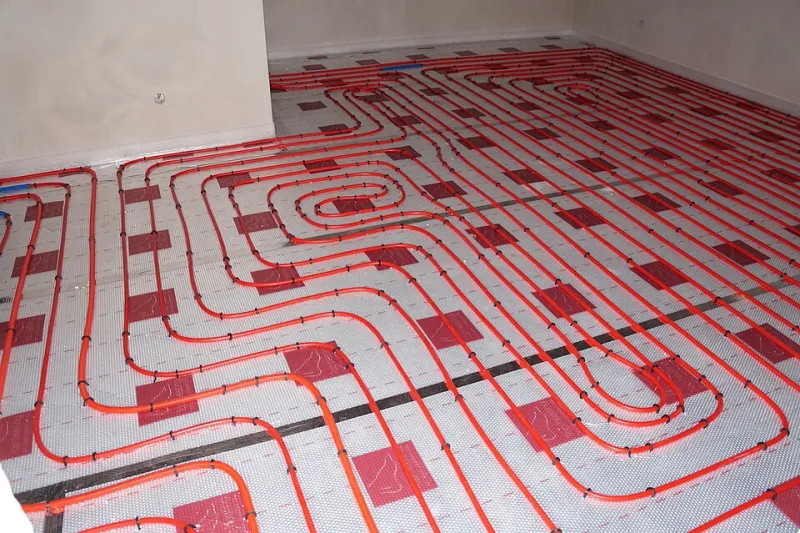
Photo: Kiwiev, CC0, via Wikimedia Commons
There is something undeniably seductive about stepping onto a warm floor on a cold winter morning. No slippers required. No shock of cold tile against bare feet. Just steady, enveloping warmth rising from below. It is a sensation that has driven millions of American homeowners to install radiant floor heating systems — and it is a sensation that carries a climate price tag the industry rarely advertises.
Radiant floor heating, once the exclusive province of high-end custom homes, has migrated steadily into the mainstream. Home renovation programs celebrate it. Real estate listings tout it as a premium feature. Hardware retailers stock electric mat systems that promise straightforward DIY installation. The market has responded accordingly: the global radiant floor heating industry was valued at over $5 billion in recent years and is projected to expand considerably through the end of the decade, with North America representing one of its fastest-growing segments.
What gets far less attention is the energy infrastructure required to sustain that warmth — and what that infrastructure means for the planet.
How the System Actually Works
Radiant floor heating operates through one of two primary mechanisms. Hydronic systems circulate heated water through tubing embedded beneath the floor surface, typically powered by a boiler. Electric systems rely on resistance heating cables or mats installed under tile, hardwood, or laminate, drawing directly from the home's electrical supply.
Both approaches are fundamentally less efficient than they might appear. Unlike forced-air systems, which can be zoned and adjusted with relative ease, radiant floor systems heat an entire thermal mass — the floor itself — before any warmth reaches the living space above it. This process requires sustained energy input, often over extended periods, particularly in colder climates where the system must work harder to maintain consistent temperatures.
Electric radiant systems are especially energy-intensive. Resistance heating, by its nature, converts electrical energy into heat at a one-to-one ratio. There is no multiplication of efficiency, no heat pump coefficient of performance greater than one. Every kilowatt-hour consumed produces exactly one kilowatt-hour of heat — a stark contrast to modern heat pump technology, which can deliver two to four units of heating energy for every unit of electricity consumed.
In states where the electrical grid remains heavily dependent on fossil fuels — and much of the American grid still is — this inefficiency translates directly into carbon emissions.
The Comfort Economy and Its Costs
Understanding why Americans have embraced heated floors so enthusiastically requires acknowledging the powerful cultural and psychological forces at work. The home improvement industry has spent decades cultivating an aesthetic of domestic comfort that treats warmth as both a luxury and a right. Television programs dedicated to renovation and interior design consistently present heated floors as a hallmark of thoughtful, sophisticated living.
This framing is not accidental. It positions energy consumption as an expression of personal taste and self-care rather than as a resource decision with external consequences. When a homeowner installs heated bathroom floors, the conversation tends to center on resale value and morning comfort, not on the additional kilowatt-hours that will appear on every utility bill for the life of the system.
The marketing language surrounding these products rarely engages honestly with energy use. Terms like "efficient radiant warmth" and "even heat distribution" emphasize comfort mechanics while obscuring the underlying consumption reality. A homeowner who would hesitate before leaving a space heater running continuously for hours may not apply the same scrutiny to a heated floor system performing exactly that function beneath their feet.
What the Numbers Reveal
The energy implications of widespread radiant floor adoption are not trivial. A typical electric radiant mat installed in a bathroom — one of the most common applications — may draw between 10 and 15 watts per square foot. A modest 50-square-foot bathroom installation running for eight hours daily during a five-month heating season can consume several hundred kilowatt-hours annually for a single room.
Scale that across a full home installation, or across the millions of households that have adopted some form of radiant heating, and the cumulative load on the grid becomes substantial. In regions where electricity is generated primarily from natural gas or coal, that load carries a meaningful carbon consequence.
Hydronic systems, while generally more efficient than their electric counterparts when powered by high-efficiency boilers, introduce their own complications. The long thermal lag of heating a floor mass means the system must often run in anticipation of occupancy rather than in direct response to it, reducing the practical gains from smart thermostats or occupancy-based controls.
Alternatives That Deliver Comfort Without the Carbon
The environmental case against radiant floor heating is not an argument against warmth itself. It is an argument for pursuing that warmth through means that do not carry disproportionate climate costs.
Modern heat pump systems, including air-source and ground-source varieties, represent the most compelling alternative for whole-home heating. When paired with increasingly clean electrical grids, heat pumps offer dramatic efficiency advantages over resistance heating of any kind. Their carbon footprint shrinks further as renewable energy capacity expands — a dynamic that resistance heating systems cannot replicate.
For homeowners specifically drawn to the sensation of floor warmth, radiant solutions powered entirely by solar-generated electricity represent a more defensible option, provided the solar capacity genuinely offsets the system's consumption. Thermal rugs and high-quality area rugs offer a low-technology alternative that addresses the tactile discomfort of cold floors without any energy input whatsoever.
Building envelope improvements — better insulation, air sealing, and window upgrades — address the root cause of cold floors by preventing heat loss rather than compensating for it with continuous energy input. A well-insulated home simply does not produce the cold floor problem that radiant heating is designed to solve.
Rethinking What Comfort Costs
The broader lesson embedded in the radiant floor heating story is one that recurs throughout the American relationship with domestic energy use. Technologies that deliver immediate, sensory comfort tend to escape the scrutiny applied to more visible forms of consumption. A gas-guzzling vehicle draws criticism; a quietly humming floor heating system does not.
Yet the climate does not distinguish between conspicuous and invisible consumption. Every kilowatt-hour drawn through a resistance heating cable contributes to grid demand, and in much of the country, that demand is still met in significant part by burning fossil fuels.
As the United States works to decarbonize its housing stock — a project that will define much of the coming decade's climate policy — the choices embedded in home renovation culture will matter enormously. The question is not whether Americans deserve to be comfortable in their own homes. They do. The question is whether the pursuit of that comfort must come at a cost the planet cannot afford.
Warm floors are a pleasure. A warming planet is not. The distance between those two realities runs directly through the choices Americans make about how they heat the spaces they inhabit — and it begins, quite literally, at their feet.