The Spare Fridge Problem: How America's 'Just in Case' Appliance Habit Is Draining the Grid
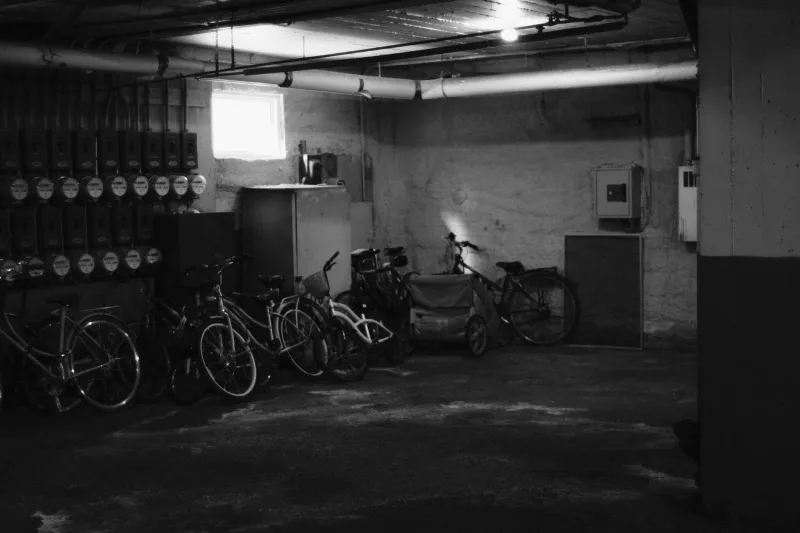
In garages from Georgia to Oregon, behind basement staircases in Ohio, and tucked into mudrooms across the Midwest, a familiar appliance hums quietly around the clock. It is not the main refrigerator — that one is in the kitchen, stocked and essential. This is the other one: the backup, the overflow unit, the relic from a previous home or a well-meaning relative. It holds a case of beer, a few frozen casseroles, and the vague promise that it might someday prove indispensable.
According to the U.S. Energy Information Administration, roughly 35 percent of American households own a second refrigerator. That figure represents tens of millions of appliances running continuously, year after year, often in thermally hostile environments like uninsulated garages where summer heat forces the compressor to work far harder than it was designed to. The cumulative energy demand of these secondary units adds up to a climate burden that is anything but invisible — even if the appliances themselves are easy to ignore.
The Energy Math Most Households Have Never Done
A standard refrigerator manufactured in the 1990s or early 2000s — the vintage most commonly repurposed as a spare — consumes between 800 and 1,400 kilowatt-hours of electricity per year. By comparison, a modern Energy Star-certified unit might use fewer than 400 kilowatt-hours annually. When that older appliance is placed in an unheated or uncooled garage, where ambient temperatures can swing from below freezing to above 90 degrees Fahrenheit, efficiency deteriorates further. Studies from the Lawrence Berkeley National Laboratory have found that garage-installed refrigerators can consume up to 50 percent more electricity than the same unit operating in a climate-controlled kitchen.
At the national average electricity rate, a single older spare refrigerator can cost a household $150 to $200 per year in electricity — a figure that accumulates quietly because it never appears as a line item on any receipt. Multiply that across the roughly 40 million secondary units estimated to be operating across the country, and the aggregate energy consumption rivals that of several mid-sized coal-fired power plants running continuously.
The carbon implications follow directly. In states where the electrical grid still depends heavily on fossil fuels — including much of the Southeast, the Plains, and parts of the Midwest — that electricity carries a substantial emissions burden. A single aging spare refrigerator in such a region may generate more than a metric ton of CO₂ equivalent over a decade of uninterrupted operation.
The Psychology of Appliance Accumulation
Understanding why so many Americans maintain these secondary units requires grappling with a cultural logic that is deeply ingrained. The United States has long celebrated abundance and preparedness as virtues, and the spare refrigerator sits at the intersection of both. It represents readiness for the holiday gathering, the unexpected houseguests, the bulk purchase from a warehouse retailer that simply won't fit in the main unit.
Behavioral economists describe this pattern as a form of loss aversion applied to storage capacity. Households are reluctant to part with the perceived safety net of extra cold space, even when that space sits largely empty for months at a time. There is also a sunk-cost dimension: if the appliance was free — inherited from a parent, left behind by a previous tenant, or rescued from a neighbor's curb — its ongoing operating costs feel abstract rather than real.
The transition to larger-format grocery shopping, driven by the expansion of warehouse clubs like Costco and Sam's Club over the past three decades, has reinforced this tendency. When a household routinely purchases food in quantities that strain a standard refrigerator, a second unit begins to feel like a rational infrastructure investment rather than an indulgence.
What Stays Cold and What It Actually Costs the Earth
Research into the actual contents of spare refrigerators reveals a telling gap between perception and reality. Surveys and home energy audits consistently find that secondary units are, on average, less than half full. Common occupants include alcoholic beverages, condiments with expiration dates years in the future, frozen items that could be consolidated into a primary freezer, and foods that have been forgotten entirely.
This underutilization matters because refrigerators are most efficient when they are reasonably full — thermal mass helps maintain temperature stability and reduces compressor cycling. An underloaded spare unit in a warm garage is, in energy terms, among the least efficient appliances in the American home. It is, in effect, air-conditioning a mostly empty box in an environment that actively works against it.
From a climate perspective, the calculus is stark. The emissions generated by a decade of operating one inefficient spare refrigerator are roughly equivalent to driving a gasoline-powered vehicle approximately 2,500 miles. That is not an enormous individual number, but aggregated across tens of millions of households, the collective impact becomes a meaningful contributor to residential sector emissions — a sector that climate policy has struggled to address precisely because its inefficiencies are dispersed, habitual, and largely invisible.
Practical Alternatives That Don't Require Sacrifice
The goal is not to shame households for wanting adequate food storage. It is to encourage a more deliberate accounting of what that storage actually costs — financially and environmentally — and to surface alternatives that may serve the same practical needs with far less climate impact.
For households whose primary driver is bulk grocery storage, upgrading to a larger, modern Energy Star refrigerator and retiring the secondary unit almost always results in net energy savings. A single contemporary large-capacity refrigerator typically uses less electricity than two older, smaller units combined.
For households that primarily use the spare unit for beverages, a compact, purpose-built beverage cooler consumes a fraction of the energy of a full-size refrigerator and is sized appropriately for its actual function. These units, when Energy Star certified, can operate on fewer than 200 kilowatt-hours annually.
For households that depend on extra freezer capacity, a standalone chest freezer — particularly a modern, well-insulated model — is dramatically more efficient than a refrigerator-freezer combination used primarily for its freezer compartment. Chest freezers retain cold air far more effectively than upright models when opened, and their insulation-to-volume ratio is generally superior.
Utility companies in many states offer rebate programs specifically for the retirement of old, inefficient refrigerators. Programs administered through the Appliance Recycling Centers of America and various regional utilities will, in some cases, pick up the unit at no charge and ensure it is recycled responsibly, preventing refrigerants from being released into the atmosphere.
A Small Change With Collective Weight
Climate conversations in the United States tend to gravitate toward the largest, most visible sources of emissions: power plants, transportation networks, industrial agriculture. These are consequential targets, and they deserve sustained policy attention. But the residential sector — with its millions of individually modest but collectively significant inefficiencies — represents an equally important frontier.
The spare refrigerator is, in many ways, an ideal symbol of that frontier. It is not malicious. It is not the product of carelessness. It is simply a habit that made sense in one era and has persisted into another, accumulating costs that most households have never been invited to examine. On a planet where every kilowatt-hour carries a consequence, that examination is overdue.
Plugging in a second refrigerator is easy. Unplugging it — and understanding why that matters — may be one of the quieter but more meaningful climate choices an American household can make.