Parked and Forgotten: The Climate Cost of America's Idle Vehicle Problem
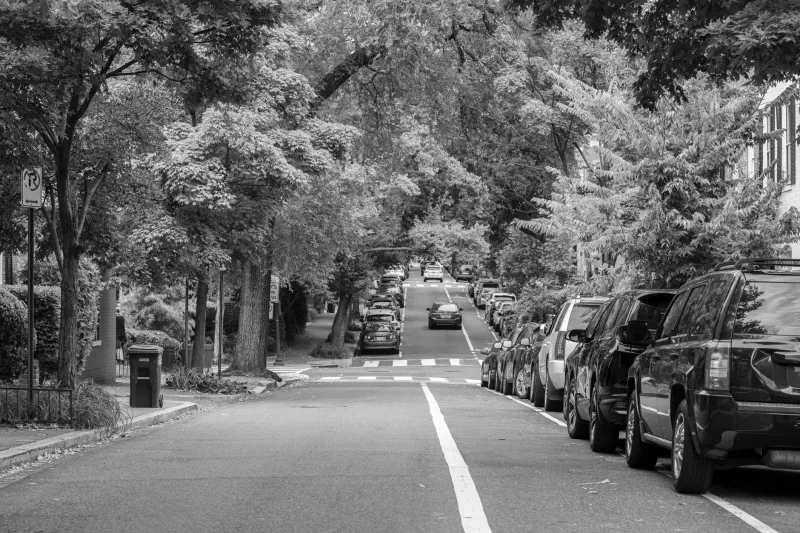
Drive through any American suburb on a Tuesday morning and the evidence is everywhere: driveways lined with two, three, sometimes four vehicles, most of them motionless. Minivans that haven't left the garage since last month's soccer tournament. Pickup trucks used twice a year for furniture moves. Sedans kept around because getting rid of them felt like too much trouble. Across the United States, tens of millions of registered vehicles spend the vast majority of their lives doing absolutely nothing—and that inactivity carries a climate price that rarely enters the national conversation.
We tend to think of a car's environmental footprint as something measured in miles per gallon or grams of CO₂ per kilometer driven. But that framing misses a critical part of the picture. A vehicle's carbon story begins long before it ever leaves a dealership, and it doesn't pause simply because the keys are hanging unused on a hook by the door.
The Carbon Already Spent
Manufacturing a new passenger vehicle generates somewhere between 6 and 35 metric tons of carbon dioxide equivalent, depending on the model, the materials involved, and the energy sources powering the factory. For electric vehicles, that figure can skew higher on the front end, owing to battery production. Regardless of powertrain type, a significant portion of a vehicle's total lifetime emissions are baked in before the engine ever turns over.
When a car sits unused for months or years, those embedded emissions are never amortized across meaningful transportation utility. The climate investment, so to speak, yields no dividend. A household that purchases a third vehicle and drives it fewer than 2,000 miles a year has essentially spent a substantial carbon budget to acquire something that functions, in practical terms, as an expensive storage object.
According to data from the Federal Highway Administration, the average American household owns approximately 1.9 vehicles, but vehicle registrations consistently outpace licensed drivers in the United States. That gap—millions of registered cars beyond what the driving population can practically use—points to a systemic overcapacity in personal transportation that rarely gets examined through a climate lens.
The Ongoing Drain of Standby Ownership
Keeping a vehicle registered, insured, and minimally maintained isn't free—environmentally or financially. Tires degrade whether a car moves or not. Oil oxidizes. Batteries discharge. Insurance policies require periodic renewal, which in turn funds an industry whose operations carry their own resource footprint. Roadway and parking infrastructure—much of it publicly subsidized—must accommodate these dormant vehicles just as it would active ones.
There is also the question of what economists call opportunity cost, translated here into environmental terms. The space occupied by an idle second car in a two-car garage is space that could theoretically store solar equipment, support urban food production, or simply reduce the household's demand for external storage facilities. The driveway holding that third vehicle is impervious surface contributing to stormwater runoff and urban heat. The climate costs of idle car ownership are diffuse, but they are real.
Why Americans Hold On
Understanding the persistence of multi-vehicle households requires acknowledging the genuine structural constraints many Americans face. In large portions of the country, public transit is either absent, unreliable, or designed for a pre-automobile geography that no longer matches where people actually live and work. Rural and exurban communities often have no practical alternative to personal vehicle ownership. For families managing complex, multi-destination daily schedules—school drop-offs, medical appointments, shift work with irregular hours—having a backup vehicle feels less like a luxury and more like a survival strategy.
Those pressures are real, and dismissing them as mere convenience culture misses the policy failures that created them. Decades of federal investment in highway infrastructure, combined with chronic underinvestment in intercity rail and local transit, have produced a transportation landscape that structurally incentivizes car ownership. When the alternative to a second car is a bus that comes every 45 minutes and doesn't go where you need to go, the second car wins almost every time.
And yet, that structural reality does not fully explain the phenomenon. A meaningful share of idle vehicles exist not because their owners have no alternatives, but because the decision to acquire them was made when circumstances were different—before a household relocated to a more transit-accessible neighborhood, before children grew up and left home, before remote work reduced the daily commute to zero. Inertia, not necessity, keeps many of these cars on the road in name if not in practice.
The Sharing Economy's Unfulfilled Promise
A decade ago, the rise of ride-hailing services and peer-to-peer car-sharing platforms prompted optimistic predictions about the coming decline of personal vehicle ownership. Those predictions have largely not materialized. While services like Zipcar and Turo have carved out niches, and ride-hailing has become a fixture in urban centers, overall vehicle registrations in the United States have continued to climb.
Part of the explanation lies in how those platforms have been deployed. Ride-hailing, in particular, appears to have drawn riders away from public transit rather than away from personal car ownership, according to multiple studies. The net effect on vehicle miles traveled—and on the total number of cars in circulation—has been modest at best, and possibly negative from a climate standpoint.
That does not mean the model is inherently flawed. It means the model has not yet been paired with the policy environment, land-use planning, and public investment that would allow it to function as a genuine substitute for ownership rather than a supplement to it.
Rethinking the Math
For households in a position to genuinely reconsider their vehicle footprint, the climate math of shedding an underused car is more compelling than it might initially appear. Selling or donating a vehicle that drives fewer than 3,000 miles annually removes embedded maintenance emissions, frees household resources that could fund transit passes or e-bike purchases, and—if the vehicle is retired rather than resold—eliminates its future operational emissions entirely.
More broadly, the conversation about transportation and climate in America needs to move beyond fuel efficiency standards and EV adoption timelines. Those are important levers, but they leave unexamined the question of how many vehicles we actually need. A future in which every American drives a zero-emission car is still a future defined by enormous resource consumption, sprawling parking infrastructure, and roads engineered around the assumption of individual mobility.
The phantom fleet—those millions of cars parked and largely forgotten in garages and driveways across the country—is a symptom of that assumption. Addressing it requires not just individual decisions, but a policy commitment to building the kind of transportation alternatives that make those decisions genuinely possible for more Americans.
The Earth does not benefit from a car that sits idle. It benefits from a transportation system designed well enough that the car was never purchased in the first place.