When Night Never Falls: The Ecological and Energy Cost of America's Outdoor Lighting Obsession
The Light We Leave On
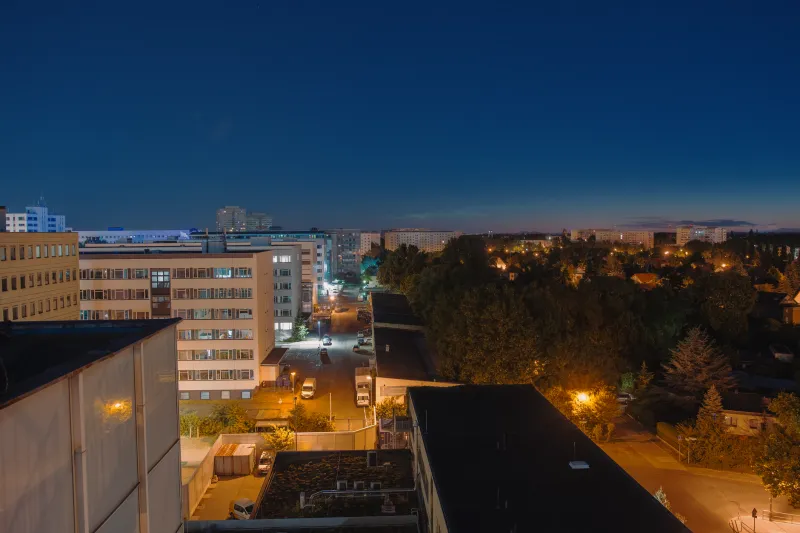
Drive through any American suburb after midnight and you will find a landscape that never truly sleeps. Floodlights flood driveways. Decorative string lights trace fence lines. Motion-sensor fixtures blaze to life at the slightest provocation. Porch lamps burn from dusk until dawn, every single night, without exception. To most homeowners, this is simply a matter of safety and aesthetics. To ecologists, it is something closer to a slow-motion catastrophe.
Artificial light at night—abbreviated in scientific literature as ALAN—has become one of the most pervasive and least discussed forms of environmental pollution in the United States. Unlike carbon emissions, which are invisible to the naked eye, light pollution is literally visible from space. Satellite imagery shows that the continental United States glows with an intensity that has grown measurably brighter every decade. Yet its consequences for ecosystems, wildlife, and even residential energy budgets remain poorly understood by the public.
What Darkness Actually Does
For most of Earth's evolutionary history, the only sources of nighttime illumination were the moon, the stars, and the occasional lightning strike. Entire kingdoms of life organized their behavior, reproduction, and survival around those ancient rhythms. Insects timed their emergence by lunar cycles. Birds navigated migration routes by starlight. Fireflies evolved bioluminescent signals calibrated to compete with nothing brighter than the Milky Way.
That biological inheritance did not vanish when Thomas Edison changed the world. It persists in the nervous systems of every moth, songbird, sea turtle, and tree frog alive today—and it is increasingly incompatible with the neighborhoods humans have built around them.
The science is stark. Studies published in peer-reviewed journals have documented that artificial lighting disrupts the circadian rhythms of insects, suppresses melatonin production in birds and mammals, and alters the timing of plant flowering in ways that cascade unpredictably through food webs. Nocturnal pollinators—moths chief among them—are drawn to artificial lights and either die from exhaustion circling a fixture or are diverted away from the flowers they would otherwise visit. Researchers have estimated that a single outdoor light source can kill thousands of insects in a single evening during peak season.
The Migration Problem Nobody Talks About
Each spring and fall, roughly three billion birds move across North America along routes established over millions of years of evolution. Many of those birds navigate at night, relying on stars and the Earth's magnetic field to orient themselves. Artificial light interferes with both systems.
Brightly lit buildings and residential clusters create what ornithologists call "light traps"—zones where migrating birds become disoriented, circle endlessly, collide with structures, or exhaust themselves in confused flight. The American Bird Conservancy estimates that building collisions kill between 600 million and one billion birds annually in the United States, with nighttime lighting identified as a primary contributing factor. Urban areas during migration season can be particularly deadly, as birds descend toward light rather than continuing toward appropriate habitat.
Less discussed, but equally troubling, is the disruption of seasonal behavior. When artificial light convinces a bird's endocrine system that spring has arrived weeks early—or that autumn has not yet come—the consequences for breeding timing, insect prey availability, and long-distance migration synchrony can be severe.
Insects at the Breaking Point
The broader insect decline is well documented. Global biomass estimates suggest that flying insect populations have fallen by more than 75 percent in some regions over the past four decades. Light pollution is not the sole driver of that collapse—pesticide use, habitat fragmentation, and climate change all contribute—but researchers increasingly regard ALAN as a significant and underappreciated factor.
The mechanism is straightforward and brutal. Insects evolved phototaxis—attraction to light—in a world where moving toward a bright point in the sky meant moving upward, toward open air and potential mates. A backyard floodlight hijacks that instinct entirely. Insects circle, exhaust themselves, and die, or are picked off by predators smart enough to congregate near outdoor fixtures. The cumulative effect across tens of millions of American households, night after night, represents an enormous and largely unacknowledged drain on insect populations that underpin nearly every terrestrial food web.
The Energy Dimension
Beyond biodiversity, outdoor residential lighting carries a direct and quantifiable climate cost. The U.S. Department of Energy estimates that outdoor residential lighting consumes approximately 15 percent of a typical household's electricity budget. Across 140 million American housing units, that adds up to an enormous and largely unnecessary load on the electrical grid—one that, in states still dependent on fossil fuels for power generation, translates directly into carbon emissions.
Much of that consumption is genuinely wasteful. Fixtures pointed upward or outward scatter light into the sky rather than directing it toward the surfaces they are meant to illuminate. Lights left on at full intensity throughout the night serve no functional purpose during the hours when no one is moving or working outdoors. The International Dark-Sky Association has long advocated for shielded, downward-directed fixtures as the baseline standard for responsible outdoor lighting—a standard that the majority of American residential fixtures do not meet.
Practical Alternatives That Don't Sacrifice Safety
The good news is that reducing light pollution does not require abandoning outdoor lighting altogether. A modest set of behavioral and technological changes can dramatically reduce both the ecological impact and the energy cost of residential illumination.
Motion activation remains the single most effective intervention available to homeowners. A fixture that activates only when motion is detected provides equivalent security deterrence while operating for a fraction of the hours—and consuming a fraction of the energy—of an always-on light.
Warm-spectrum LEDs matter more than most people realize. Blue-white light, common in standard LED bulbs, is particularly disruptive to insect and bird biology. Warm amber LEDs, rated at 2700 Kelvin or below, produce far less ecological disruption while still providing adequate illumination for human use.
Shielded, downward-directed fixtures concentrate light where it is actually needed—on pathways, steps, and entry points—rather than broadcasting it horizontally into neighboring yards and the sky above. This approach improves functional illumination while reducing the light-pollution footprint significantly.
Timers and dimmers allow homeowners to reduce intensity or shut off lights entirely during the late-night hours when human activity is minimal and ecological disruption is at its highest.
Landscape lighting audits are increasingly offered by utility companies and environmental nonprofits as a service to homeowners who want to reduce their footprint but are unsure where to start.
Reclaiming the Dark
There is something quietly radical about the idea that environmental responsibility might require doing less rather than more—that the most meaningful action a homeowner can take on a given night is simply to turn a light off. In a culture that equates brightness with progress and darkness with danger, that reframing takes deliberate effort.
But the science is consistent. Natural darkness is not an absence. It is a resource—one that migratory birds, nocturnal pollinators, and entire ecosystems have depended upon for longer than our species has existed. The American instinct to illuminate everything within reach is understandable, but it is not without consequence.
Every light we leave burning through the night is a small decision with a surprisingly large reach. Understanding that reach is the first step toward something better.